

Cool-season flowers such as calibrachoa, petunias, snapdragons and osteospermum often bloom longer in pots than in the ground in Arizona. A container gives you fast drainage, a mix you can keep near neutral, and a spot you can shade or move.
Key takeaways
- Plant cool-season flowers in pots from mid-October to mid-November, and expect bloom until highs reach the upper 80s to 90s, often April or May.
- Use pots at least 12 inches wide for a single plant and 16 to 24 inches for mixed pots, because more mix holds moisture longer.
- Fill pots with fresh bagged potting mix, never native soil, which is alkaline and often sits on caliche.
- Water when the top 1 to 2 inches of mix is dry, about every 3 to 5 days in winter and often daily by April.
- Move pots to morning sun and afternoon shade once daytime highs pass about 85°F.
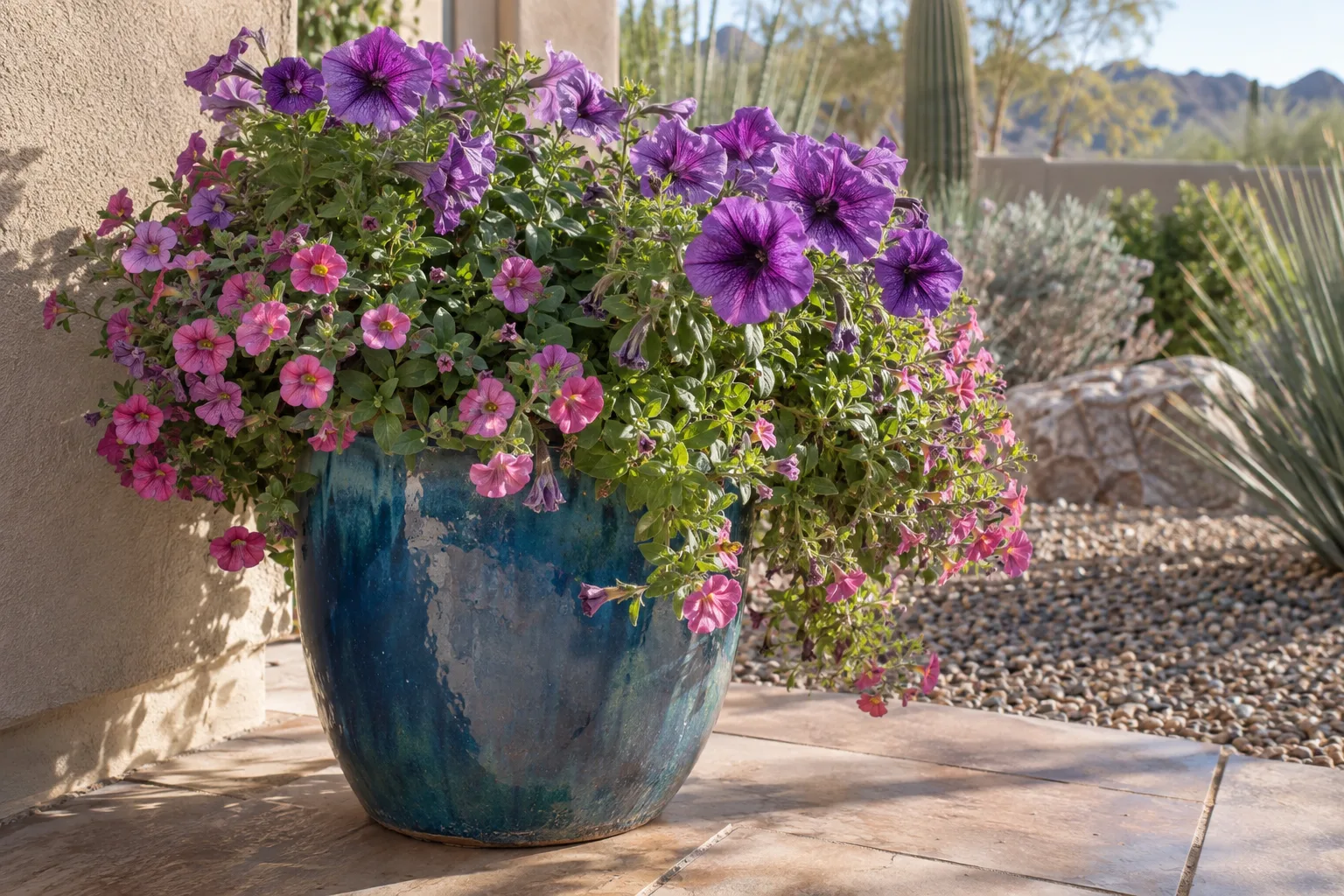
Why do some flowers do better in pots in Queen Creek?
Pots let you swap our native soil for a mix with better drainage and a lower pH, and they let you control how much sun a plant gets. Native soil in Queen Creek and the East Valley is alkaline, often with a pH of 7.5 to 8.5, and caliche can sit 6 to 18 inches below the surface.
Alkaline soil ties up iron, so leaves turn yellow while the veins stay green (iron chlorosis). Compacted or clay-heavy beds hold water around the crown, and plants such as snapdragons and nemesia rot there. A bagged potting mix drains in minutes and starts around pH 5.5 to 6.5.
In-ground planting still works if you dig a wide hole, blend in compost and plant on a slight mound. A pot gets you a similar result in an afternoon. Our irrigation water is hard, so even potted flowers need fresh mix each season to keep salts and pH from creeping up.
Which 8 flowers do better in pots than in the ground in Arizona?
Calibrachoa, petunias, snapdragons, nemesia, diascia, lobelia, bacopa and osteospermum all bloom through our cool season and respond well to container life. These are varieties we commonly carry, though availability changes week to week and season to season, so browse our annual flowers and foliage to see what is in.

Calibrachoa (Calibrachoa hybrids)
Calibrachoa grows 6 to 10 inches tall and trails 12 to 24 inches. Give it full sun in winter and morning sun with afternoon shade by spring, and water when the top inch of mix dries. It is sensitive to alkaline soil and yellows easily in the ground, so fresh potting mix makes a visible difference. Drawback: it declines fast if the mix stays soggy or dries out completely.
Petunias (Petunia x hybrida)
Petunias reach 8 to 18 inches tall and spread 12 to 36 inches, depending on the type. They want full sun and moderate water. In a pot you can feed them regularly and keep the mix from turning alkaline, which helps keep leaves green. Drawback: they get leggy and tired once highs reach the 90s, and many types need deadheading.
Snapdragons (Antirrhinum majus)
Snapdragons range from 6 inches to 3 feet tall, depending on the type, and want full sun with moderate water. Their crowns rot in wet, heavy soil, so a pot with fast drainage suits them well. Drawback: tall types may need staking in wind, and all of them fade as spring heat builds.
Nemesia (Nemesia hybrids)
Nemesia stays compact at 8 to 12 inches tall and about as wide. It prefers sun to part shade and even moisture, but it resents a soggy crown, which is why a well-drained pot works better than a flat bed. Drawback: it is short-lived here and often declines by late April or May as temperatures rise.
Diascia (Diascia hybrids)
Diascia grows 8 to 12 inches tall and 12 to 18 inches wide, with sprays of small pink, salmon or coral flowers. It wants sun and moderate water, and it fills out around taller plants in a mixed pot. Drawback: bloom slows once nights stop cooling off, so plan to replace it in spring.
Lobelia (Lobelia erinus)
Lobelia stays 4 to 8 inches tall and trails 8 to 12 inches. It needs morning sun, afternoon shade and steady moisture, which a 12-inch hanging basket or deep pot can supply. Drawback: it is the fussiest of the eight in the low desert, dries out fast in shallow containers and often fades by March or April.
Bacopa (Sutera cordata)
Bacopa grows 4 to 6 inches tall and trails 12 to 24 inches, covered in small white or lavender flowers. It does best in part sun with steady moisture and works as a filler beside upright plants. Drawback: it wilts quickly when the mix dries, and it flowers less in strong afternoon sun.
Osteospermum (Osteospermum hybrids)
African daisies reach 12 to 24 inches tall and wide and bloom in white, yellow, orange, purple and two-tone shades. They want full sun and moderate water. A pot of 14 to 18 inches gives their roots room and lets you move them out of hot afternoon sun as spring warms. Drawback: blooms close on cloudy days and in shade, and flowering slows as heat arrives.
What size pot and potting mix work best for container flowers?
Use a pot 12 to 16 inches wide for one plant or a small group, and 18 to 24 inches for a mixed arrangement, filled with bagged potting mix blended with extra perlite. A larger volume of mix holds moisture longer and buffers roots against temperature swings.
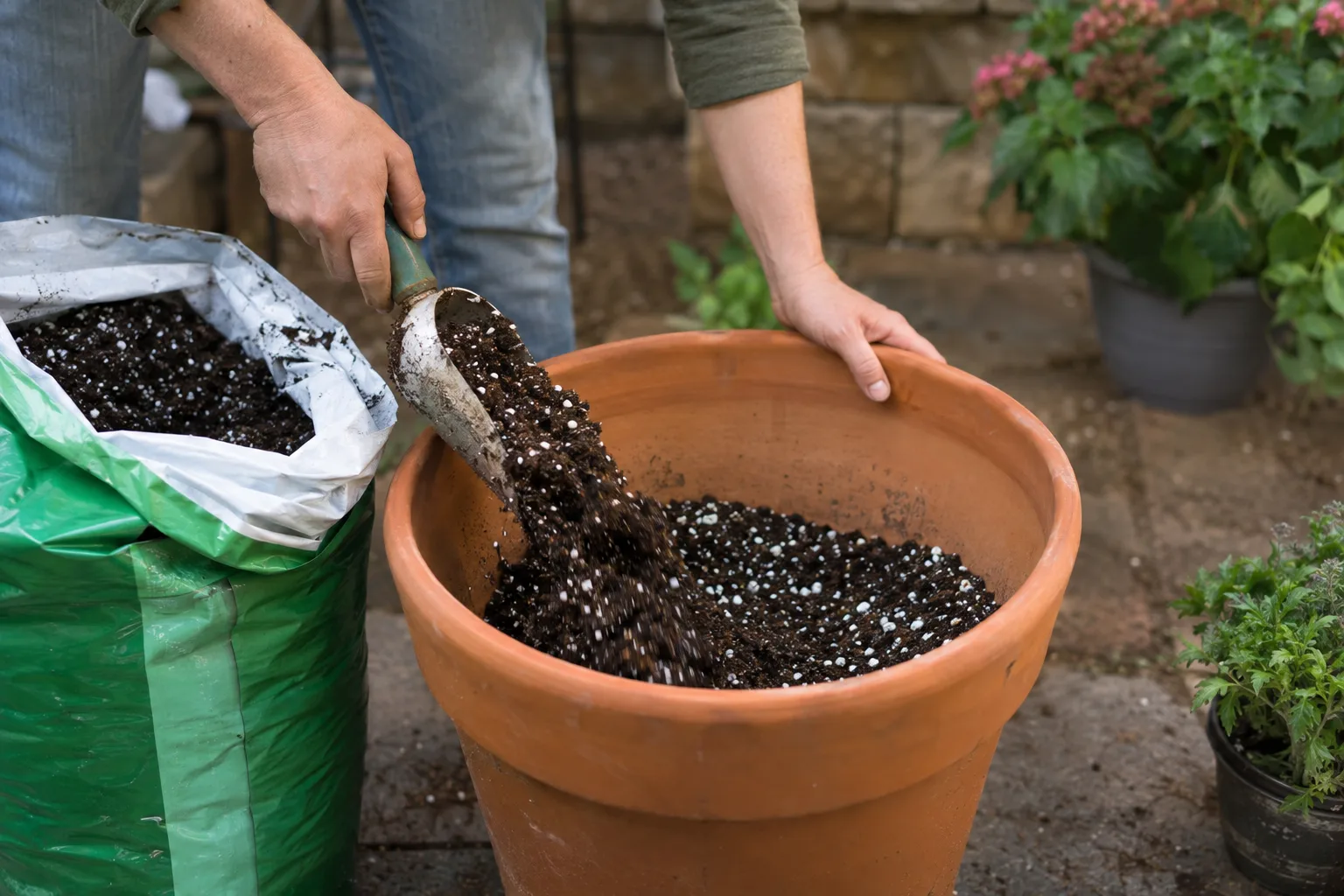
Glazed and thick-walled pots hold moisture longer than thin terra cotta, which can dry out in a day by spring. Browse our pottery and planters for sizes and materials, and check that every pot has drainage holes.
Skip garden soil and topsoil. They compact with each watering and bring in our alkaline pH. Mix in a slow-release flower fertilizer at planting, then follow the label on a liquid feed every 2 weeks or so during active bloom.
If leaves yellow between green veins, an iron chelate product used as directed on the label usually helps. Replace at least half the mix each October before you replant. Old mix collects salts from hard water and drifts toward a higher pH.
How often should I water flowers in pots?
Water when the top 1 to 2 inches of mix feels dry, which is roughly every 3 to 5 days in December and January. Pots dry faster than ground beds, so by March and April, with highs in the 80s and 90s, many need water daily.
Push a finger into the mix instead of following a calendar. Water slowly until it runs out of the drainage holes, then stop. Shallow sips leave salts from our hard water sitting in the top layer of the mix. About once a month, run water through the pot for a minute or two to flush those salts out. Morning watering lets foliage dry before night and loses less to evaporation.
Where should I put pots for the longest bloom?
An east-facing spot with morning sun and afternoon shade keeps most cool-season flowers blooming longest. In December and January, a south-facing wall gives full sun and a little reflected warmth. By March, when highs climb past 85°F, slide pots to the east side or under a patio cover or tree.
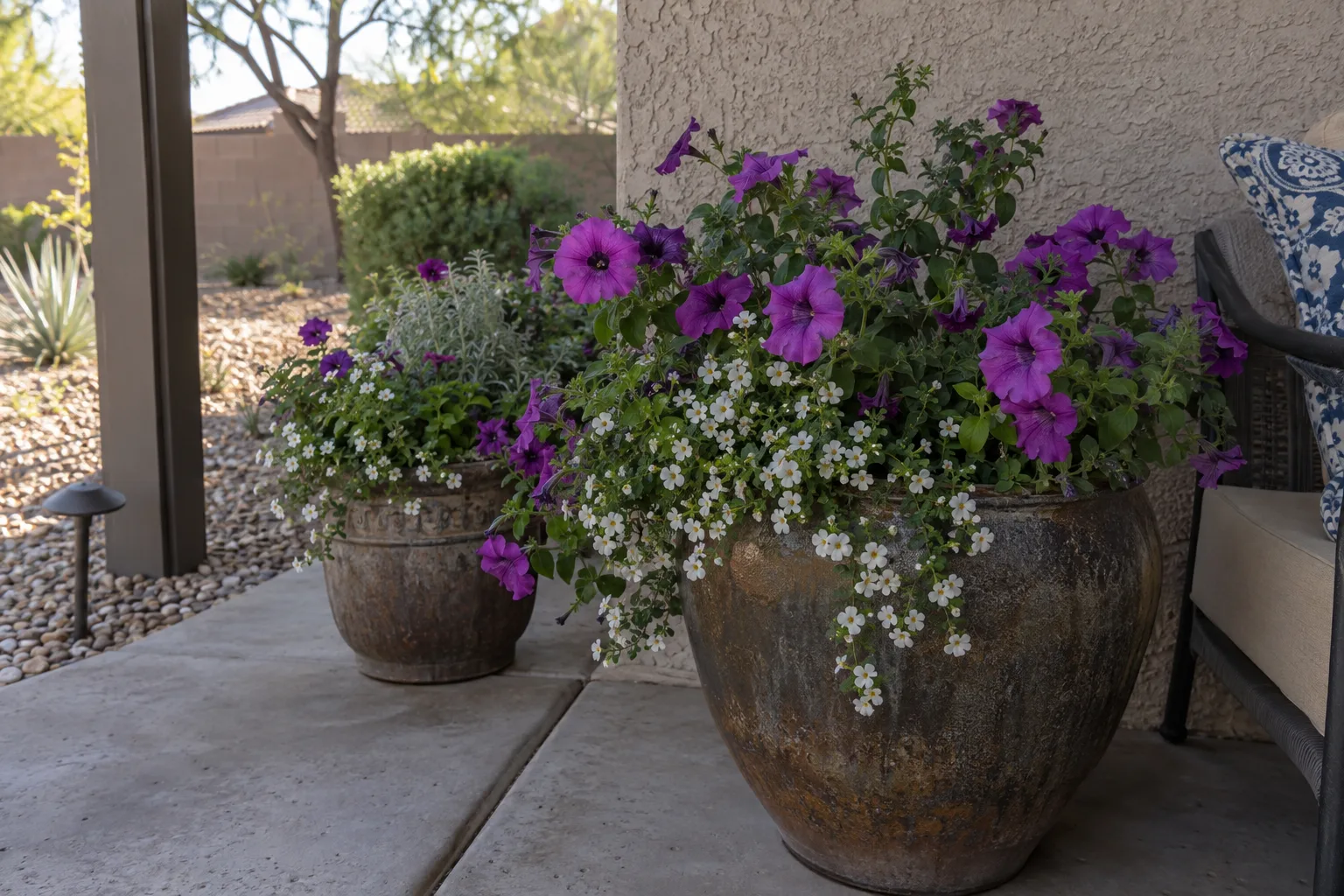
Keep pots off west-facing walls and bare pavement in spring, where reflected heat dries the mix and wilts petunias and bacopa by midafternoon. Put large pots where you want them before you fill them, because a wet 20-inch pot is heavy.
Queen Creek gets occasional winter frost. Petunias, snapdragons and calibrachoa tolerate a light frost, but roots in pots are more exposed than roots in the ground. When a forecast nears 32°F, move pots against the house or under cover, or drape frost cloth over them overnight.
When should I plant cool-season flowers in pots?
Plant from mid-October through mid-November, once daytime highs settle below about 90°F. That gives roots 4 to 6 weeks to settle in before the coldest nights of December and January. Planting earlier stresses transplants in leftover heat, and planting later shortens the bloom window.
Our gardening calendars lay out timing month by month. Bloom usually runs into April or May. When highs reach the upper 90s, pull the tired plants and refill the pots with heat-lovers such as vinca or lantana, which handle summer sun in a well-watered container.
What mistakes shorten the bloom season in containers?
- Pots with no drainage holes, or pots sitting in a full saucer, keep roots wet and lead to rot within days.
- Native soil or topsoil in a pot compacts quickly and holds the alkaline pH that yellows leaves.
- A pot under 10 inches wide can dry out daily by April, and thirsty plants stop blooming.
- Skipping fertilizer starves plants, because every watering flushes nutrients out of potting mix.
- Planting in early October, while highs are still in the 90s, stresses transplants before the cool season starts.
Frequently asked questions
Can I plant these flowers in the ground instead?
Yes, most of the eight grow in the ground if you prepare the bed. Dig a hole two to three times wider than the rootball, blend in compost, and plant slightly high so water drains away from the crown. Add iron if leaves yellow. Our classes and events page lists upcoming gardening sessions.
Can I reuse potting mix next season?
You can reuse it once if it still drains and feels loose, but refresh at least half. Old mix compacts, collects salts from hard water and drifts toward a higher pH. Remove old roots, flush the mix with water, and blend in fresh mix and slow-release fertilizer before you replant.
Do potted flowers survive frost?
Petunias, snapdragons, calibrachoa and osteospermum usually handle a light frost, but a hard freeze damages them. Roots in pots are more exposed than roots in the ground, so move pots against the house or under patio cover when the forecast nears 32°F. Frost cloth overnight also helps. Remove it in the morning.
Do hanging baskets work for these flowers?
Yes, for trailing types such as calibrachoa, bacopa and lobelia, but baskets dry faster than pots set on the ground. Hang them where they get morning sun and shelter from wind, and expect to water daily by spring. A 12 to 14 inch basket holds moisture longer than a smaller one.
Should I put saucers under my pots?
Use saucers cautiously, because standing water in a saucer keeps roots wet and invites rot. Set pots on pot feet or small blocks so water drains freely, or empty the saucer within an hour of watering. Raising pots also keeps them off hot pavement, which warms the root zone.
Are container flowers right for your yard?
They suit you if you have a patio, porch or sunny entry and can check pots every few days. They pay off most where caliche and alkaline soil make digging a chore. Skip them if you travel for weeks in spring, since pots can dry out in a day once highs pass 85°F, or if you want flowers that bloom through summer, because all eight fade in heat. Stop by our nursery in Queen Creek and we will help you match flowers and pots to your spot.
