

In March, Arizona citrus trees need a feeding if they have not had one since fall, deeper and slightly more frequent watering, light cleanup pruning after frost danger passes, and a close look at new growth for leafminer and psyllids.
Key takeaways
- Feed established trees with a citrus fertilizer between late February and March, spread under the canopy edge, kept about 12 inches off the trunk and watered in.
- Water an established tree in the ground about every 10 to 14 days in March, wetting the soil roughly 3 feet down, then adjust to your soil.
- Prune lightly after frost danger passes, and keep total removal to about a quarter of the canopy or less.
- Check new growth for leafminer trails, aphids and scale, and report anything that looks like Asian citrus psyllid to the Arizona Department of Agriculture.
- Spread 3 to 4 inches of wood chip mulch under the canopy, kept about 6 inches from the trunk.

What happens to citrus trees in Queen Creek in March?
Citrus trees come out of their winter slowdown in March, pushing pale green leaves from the branch tips and building flower buds. Our trees never go fully dormant, but growth is slow from November through February, and warming soil wakes the roots quickly.
That change raises the tree’s appetite for water and nitrogen within a few weeks. Bloom usually peaks from late March into April, depending on the variety and how the winter went, and the fruit that sets from it ripens months later. Daytime highs in the 70s and 80s can reach the 90s by the end of the month, so a routine that suits the first week of March may need adjusting by the last. Timing shifts every year.
If you are still choosing a tree, our citrus trees department shows the kinds we commonly carry, and availability changes week to week and season to season.
Should I fertilize citrus trees in March?
Yes, if the tree has not been fed since fall. Late winter into March is a common first feeding for established citrus in the low desert, and the University of Arizona Cooperative Extension describes roughly three feedings a year, with the others in late spring and late summer or early fall.
Choose a fertilizer labeled for citrus, since nitrogen drives new leaves and supports bloom, and use the label rate for your tree’s size and age. The label sets the dose. Spread it in a ring under the outer half of the canopy, keep it about 12 inches off the trunk, and rake it lightly into the soil. Water deeply before and after to carry it down and protect the roots from burn.
A tree already covered in buds does not need extra. Heavy nitrogen at peak bloom can push leafy growth ahead of flowers, so stick to one label-rate dose. Granular products release over several weeks, while liquid feeds act faster and suit a tree that is already yellowing.
How often should I water citrus in March?
For an established tree in the ground, every 10 to 14 days is a reasonable March starting point, and each session should wet the soil about 3 feet down. Frequent light sprinkling is a common habit that wets only the top few inches and keeps roots shallow, which leaves the tree exposed when summer highs pass 110°F.
Put drip emitters or a basin at the edge of the canopy, where the feeder roots are, instead of at the trunk. March is a good month to check emitters for clogs, because hard water leaves mineral deposits that block them. Sandy soil drains fast and needs shorter intervals, while clay or caliche holds water longer and can stay soggy. Dig 12 inches down a few days after watering. The soil should feel damp, not wet.
| Months | Starting interval | What to watch |
|---|---|---|
| January to February | Every 14 to 21 days | Slow growth, soil dries slowly |
| March | Every 10 to 14 days | New flush and bloom begin |
| April to May | Every 7 to 10 days | Fruit set, drop if the tree is stressed |
| June to August | Every 5 to 7 days | Highs above 110°F, leaf curl and scorch |
Can I prune citrus trees in March?
Yes, lightly, once the danger of frost has passed. Citrus needs only cleanup in March, unlike the deciduous fruit trees that get structural pruning in winter, so the goal is tidying before bloom.
Wait to cut frost-damaged branches until new growth shows where the live wood ends, then cut back to healthy green tissue. Scratch the bark with a thumbnail; green underneath means the wood is alive. Keep total removal to roughly a quarter of the canopy or less, since heavy cuts expose bark to sunburn.
These cuts are worth making:
- Dead and frost-killed wood, cut back to live tissue
- Branches crossing through the center and rubbing each other
- Low branches, trimmed so foliage sits about 18 to 24 inches off the ground
- Suckers growing below the graft union, which come from the rootstock and bear poor fruit
- Fast vertical water sprouts that spoil the shape
Clean, sharp tools matter. Wipe blades with rubbing alcohol between trees, and use a pruning saw for branches thicker than about an inch, because loppers can crush the tissue. Once buds are open, hold off on further cutting.
Which pests show up on new citrus growth in March?
Citrus leafminer, aphids and scale are the usual March visitors, and Asian citrus psyllid is the one to report. New leaves attract all of them. Inspect the flush every week or two.
Citrus leafminer
Leafminer larvae tunnel inside new leaves, leaving silvery, winding trails and curled foliage. On an established tree the damage is mostly cosmetic and the tree usually outgrows it, while a young tree can be set back by heavy damage and deserves closer watching. If you decide to spray, read the product label for citrus use, timing around bloom and protection of bees.

Asian citrus psyllid
This small insect feeds on new shoots, often with its rear end tilted up, and can leave waxy white tubes on the growth. It can carry huanglongbing (citrus greening), a serious bacterial disease with no cure. The Arizona Department of Agriculture monitors the pest, so if you suspect it, contact that agency instead of treating on a guess.
Aphids and scale
Aphids cluster on tender tips and curl the leaves, and a firm spray of water knocks most of them off. Scale shows up as small brown or gray bumps on stems and leaves. Horticultural oil is a common treatment, but labels usually warn against applying it when temperatures are expected to pass about 90°F, and late March can warm up fast, so check the forecast first.
Why do citrus leaves turn yellow in our soil?
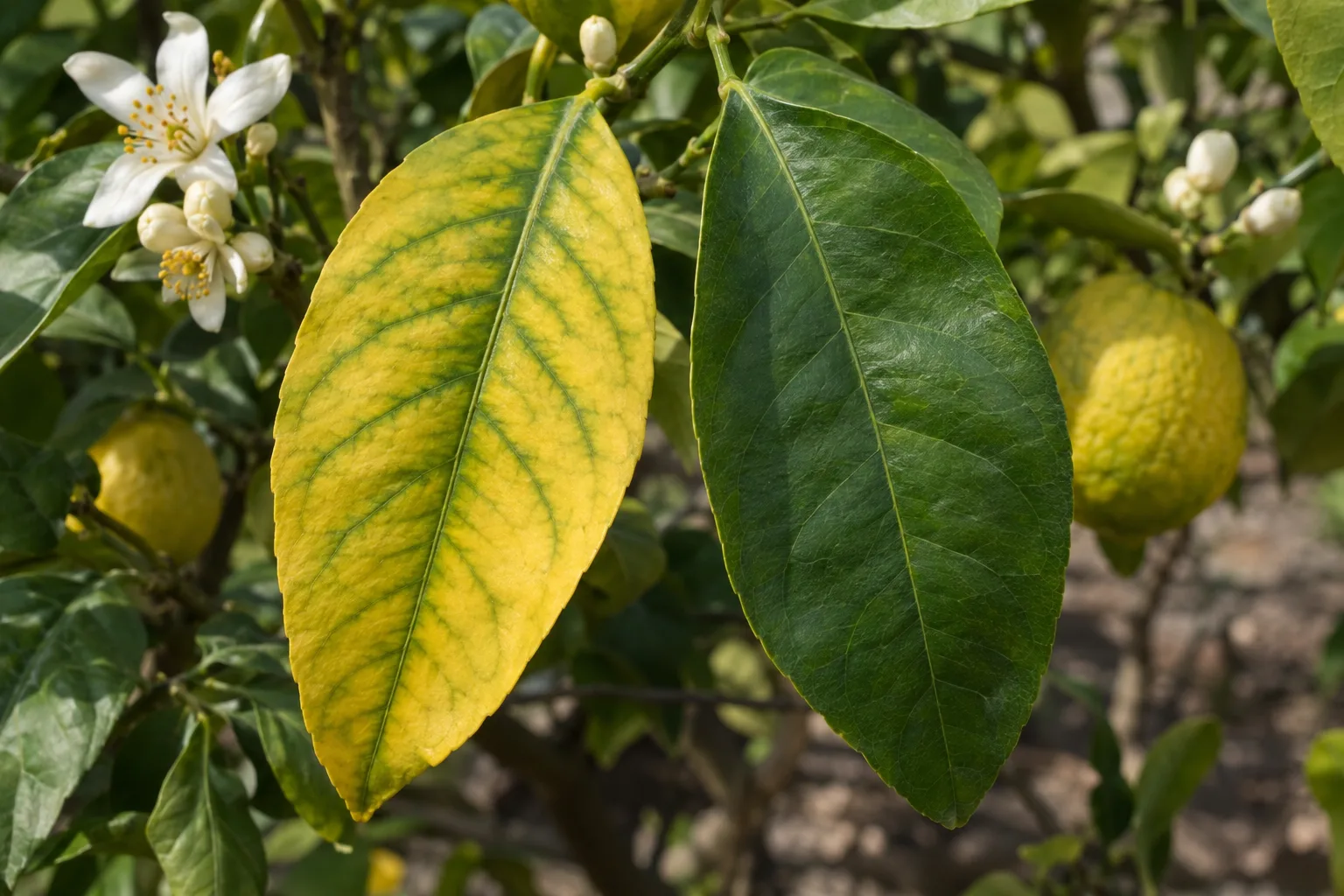
Yellow new leaves with green veins are usually iron deficiency, called chlorosis, and our alkaline soil, commonly pH 7.5 to 8.5, makes iron hard for roots to absorb. Older leaves turning an even pale yellow point to low nitrogen, while overwatering and compacted soil can also cause yellowing.
For iron, use a chelated iron product labeled for alkaline soil and follow the directions. Iron sulfate is less reliable in high pH soil. New leaves that emerge over the following several weeks show the result. Existing yellow leaves rarely turn fully green.
Mulch under the canopy
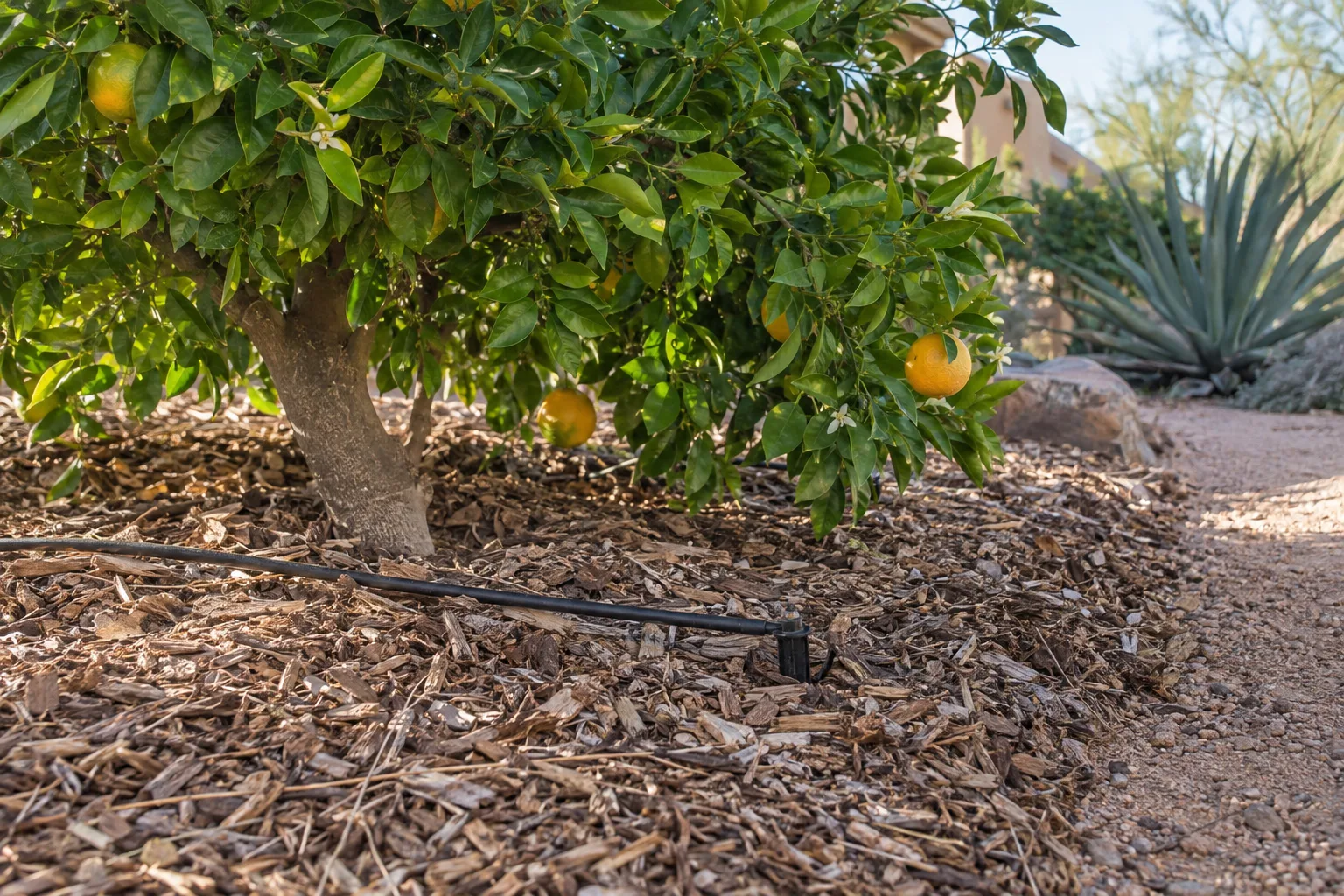
A 3 to 4 inch layer of wood chips from the drip line inward cools the soil, slows evaporation and adds organic matter as it breaks down. Keep it about 6 inches back from the trunk, because mulch piled against bark holds moisture and invites rot. Caliche, the hard calcium carbonate layer found 12 to 18 inches down in many Queen Creek yards, limits root depth and drainage, so steady watering and mulch help more than trying to dig around an established tree.
Can I plant a new citrus tree in March?
Yes, early to mid-March works well, because the soil is warming, frost danger is mostly behind us and the tree gets a few mild months to root before summer. Skip late March if highs are already in the 90s, and plan on early fall as the other planting window.
Pick a spot with 6 to 8 hours of direct sun. Dig the hole 2 to 3 times as wide as the root ball and no deeper, break through any caliche at the bottom so water can drain, and keep the graft union above the soil line. Water a new tree every few days for the first month, then stretch the interval gradually.
Varieties that grow well in the East Valley include navel and Valencia oranges (Citrus sinensis), Meyer lemon (Citrus × meyeri), grapefruit (Citrus × paradisi) and satsuma mandarin (Citrus reticulata). These are varieties we commonly carry, and availability changes week to week and season to season. Navels ripen from late fall through winter, Valencias in spring, and satsumas come early. Plan for the mature size: grapefruit and Valencias often reach 15 to 25 feet across, while Meyer lemons usually stay 8 to 12 feet and need frost protection more often than oranges.
What should I leave alone in March?
Leave heavy pruning, extra fertilizer and thick mulch against the trunk alone this month. Cutting more than about a quarter of the canopy exposes branches to sun, a second dose of nitrogen during bloom adds little, and mulch touching the bark invites rot.
Hold off on spraying open blossoms, since bees pollinate citrus, and read any pesticide label before use. A tree stressed by dry soil drops flowers and tiny fruit. Keep the watering steady instead of cutting back to save water.
For the rest of the year, our gardening calendars lay out what to do month by month, and the classes and events page is the place to look for workshops.
Frequently asked questions
Can I grow citrus in a pot in Queen Creek?
Yes, dwarf and compact citrus grow in large containers here, and Meyer lemon is a common choice. Pots dry out much faster than ground soil, so in March a container tree often needs water every few days instead of every 10 to 14. Choose pots and planters with drainage holes, and move the tree to shelter if frost is forecast.
Is it normal for citrus to drop blossoms and tiny fruit?
Yes, citrus trees shed most of their flowers and many tiny fruit in spring, and that is normal. A tree sets far more blossoms than it can carry to harvest. Heavy drop can also follow water stress, so keep deep watering steady through bloom. Hot, dry wind and sudden temperature swings add to the loss.
Should I cover citrus if frost is forecast in March?
Cover young or frost-tender trees on any night forecast near freezing, since Queen Creek can still see lows near freezing in early March some years. Drape frost cloth over the canopy and down to the ground by evening, then remove it in the morning. Lemons and limes are more tender than oranges and grapefruit, and young trees are more tender than mature ones.
How much sun does a citrus tree need?
Citrus needs about 6 to 8 hours of direct sun a day to flower and fruit well. A spot with morning sun and some afternoon shade helps young trees through summer highs above 110°F. A reflective south or west wall adds heat, so give those spots extra water and watch the leaves for scorch.
Is a March citrus routine worth it for your tree?
Yes, if your tree is in the ground, gets 6 or more hours of sun and is at least a year past planting. One feeding, a deeper watering schedule and some cleanup pruning cover most of what it needs. The routine does less for a tree sitting in heavy shade or a lawn on daily sprinklers, where fixing the site comes first. Stop by the nursery in Queen Creek and bring a photo or leaf sample if something looks off.
